
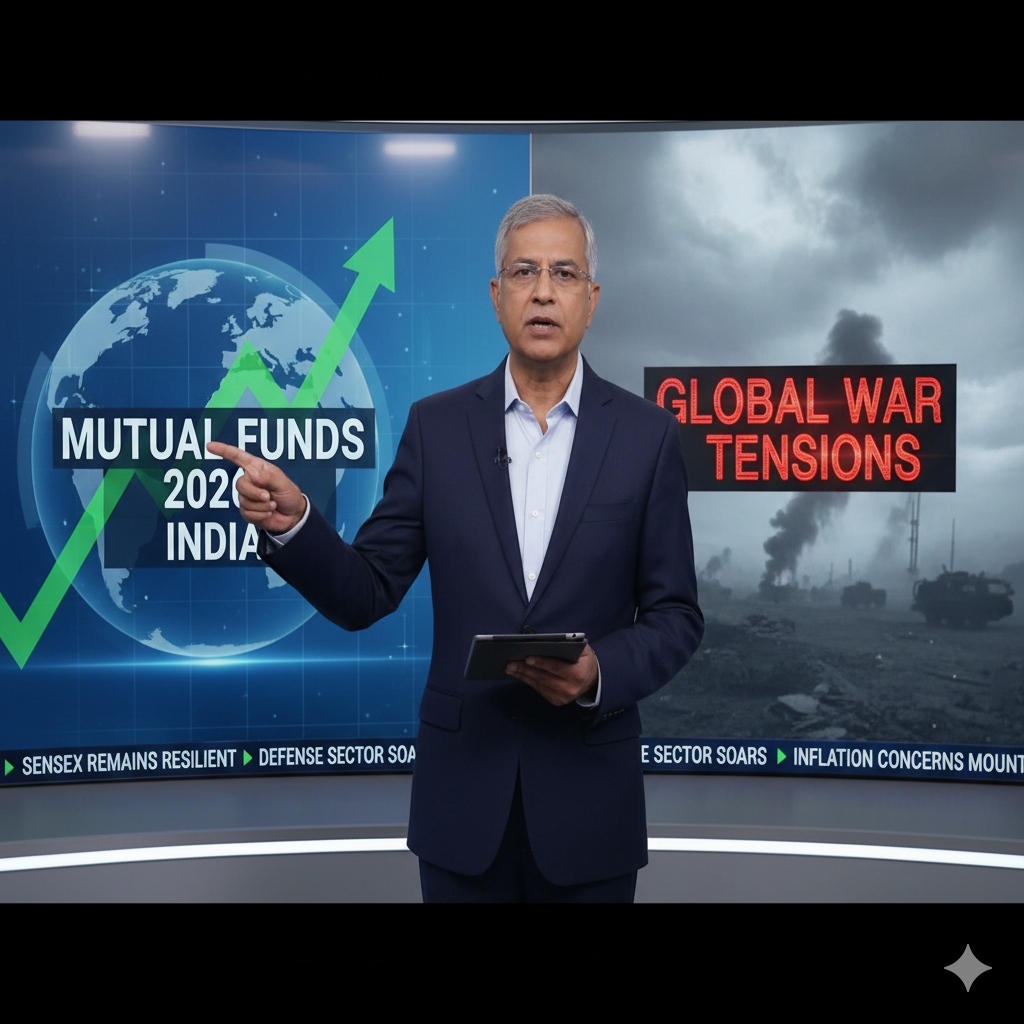
Global geopolitical tensions are once again making headlines in 2026. The ongoing conflict involving Iran, the United States, and Israel has created significant uncertainty in global financial markets. Stock markets across the world, including India, have experienced volatility as investors react to rising oil prices, supply chain disruptions, and global economic concerns.
While many investors panic during such crises, experienced investors and financial advisors often see these periods as strategic investment opportunities. In fact, market corrections caused by geopolitical events can create attractive entry points for long-term investors, particularly through mutual fund lumpsum investments.
Let’s explore why investing more in mutual funds through lumpsum in 2026 could be a smart strategy despite global conflicts.
1. Market Corrections Create Buying Opportunities
During geopolitical conflicts, markets often react emotionally. Investors rush to sell assets due to fear and uncertainty, which leads to sharp market corrections. For example, the ongoing Middle East tensions have already caused major declines in global stock markets and wiped out significant investor wealth in a short period.
However, history shows that markets typically recover after such crises. Many past conflicts caused temporary volatility but had limited long-term impact on stock market growth.
For long-term investors, this means:
- Lower market prices
- Better valuation opportunities
- Higher potential long-term returns
A lumpsum investment during market corrections allows investors to buy more mutual fund units at lower prices, which may significantly boost future returns when markets recover.
2. Mutual Funds Provide Professional Portfolio Management
Investing directly in stocks during geopolitical crises can be risky because markets become unpredictable. Mutual funds help reduce this risk because they are managed by professional fund managers.
Fund managers constantly monitor:
- Global economic developments
- Oil price fluctuations
- Interest rate movements
- Sector performance
This professional management helps investors navigate uncertain market environments caused by geopolitical tensions.
3. Volatility Rewards Long-Term Investors
War and geopolitical tensions usually increase market volatility. Rising oil prices, inflation fears, and global uncertainty can cause frequent market swings.
While volatility scares short-term traders, it can benefit long-term investors.
Reasons include:
- Markets eventually stabilize once uncertainty reduces
- Businesses continue growing despite conflicts
- Economic recovery often triggers strong market rebounds
Investors who invest during volatile periods often benefit the most when markets recover.
4. Rupee Cost Advantage in Lumpsum Investments
When markets fall sharply due to geopolitical shocks, mutual fund NAVs decline. A lumpsum investment during such phases allows investors to accumulate more units.
Example scenario:
- Market falls due to war fears
- Mutual fund NAV drops temporarily
- Lumpsum investors buy more units
When markets recover, these units can generate higher capital appreciation.
5. India’s Strong Economic Fundamentals
Despite global conflicts, India continues to remain one of the fastest-growing major economies. Domestic consumption, digital growth, and infrastructure spending continue to support long-term market growth.
Even when foreign investors pull money from markets due to global tensions, domestic investors and mutual funds often provide stability.
This makes India’s mutual fund ecosystem resilient even during geopolitical crises.
6. Diversification Protects Investors
Mutual funds invest across multiple sectors such as:
- Banking
- IT
- Pharma
- Energy
- Infrastructure
This diversification helps reduce the risk associated with geopolitical events affecting specific sectors. For example, while rising oil prices may hurt aviation companies, energy companies may benefit.
Mutual funds balance these risks automatically within their portfolios.
7. Historical Evidence: Markets Recover After Crises
History provides many examples where markets eventually recovered after geopolitical shocks.
Major conflicts like:
- Gulf War
- Iraq War
- Russia-Ukraine conflict
initially caused market declines but were followed by strong recoveries over time. Markets tend to focus on long-term economic growth rather than temporary geopolitical events.
Smart Strategy for Investors in 2026
Instead of reacting emotionally to war headlines, investors should focus on disciplined strategies.
Smart steps include:
- Increasing investments during market corrections
- Investing in diversified equity mutual funds
- Maintaining a long-term investment horizon
- Avoiding panic selling during volatility
A well-planned lumpsum investment during market dips can significantly improve long-term wealth creation.
Final Thoughts
The Iran–US–Israel conflict has created uncertainty in global financial markets in 2026. However, such crises often create rare opportunities for disciplined investors.
Mutual funds provide diversification, professional management, and long-term growth potential. For investors who have surplus capital and a long-term investment horizon, increasing lumpsum investments during market corrections may be a powerful wealth-building strategy.
As legendary investors often say:
“The best time to invest is when others are fearful.”
Nicely explained